NOVOSELYTSIA DISTRICT
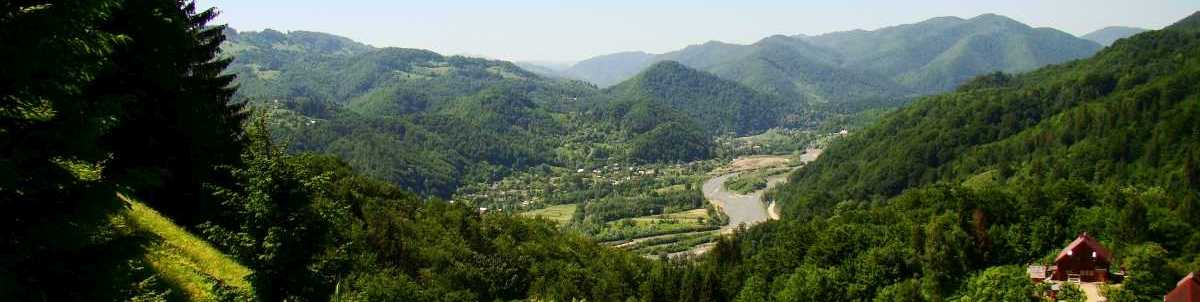
Novoselytsya district is located in the South-Eastern part of Chernivtsi oblast, on the left bank of the Prut River, in the forest and prairie area occupying the territory of 738 sq. km, which makes 9% of the region territory. It stretches for 50 km from the West to the East and 20 km from the North to the South. The district territory lies on a flat area between the Prut and Dnister rivers. Forests previously occupied a significantly larger area but currently take about 3851 hectares, which is only 5.2% of the total district area. The district population is 88,000. A distinctive feature of the district is its multinational residents. Chernivtsi-Kiyv railway and Chernivtsi-Kishinev-Odessa highway pass through the district territory.
Oak, durmast and hornbeam are the prevalent types of trees in local forests. Beech, ash-tree, maple, cherry and wild pear trees can also be found here. Hazel, dog rose, guelder rose, and cornel can be noticed in the underbrush.
The animal world of the district is highly diverse. 231 species of vertebrates live here with 29 mammals, 140 birds, 40 fishes, 11 amphibians and 11 creepers among them. Roe, wild boar, fox, gray hare, badger, squirrel, hedgehog, mole, marten, gray hamster, otter, and mink live in the woods. Crow, magpie, woodpecker, pigeon, jay, owl, and hawk are the most usual birds.
Carp, perch, loach, bream, trout, umber, pike, catfish and ruff live in rivers and reservoirs. Muskrat, nutria, pheasant and partridge also live here.
Water resources consist of small rivers being left-side tributaries of the Prut river and artificial ponds. The total water surface area of artificial and natural reservoirs makes 685 hectares. The ponds are located in river valleys and are used for fish breeding, waterfowl farming and water supply.
Novoselytsa district is rich with mineral waters the deposits of which were found in Sherbintsi, Cherlenivka, Dranitsa, Boyany and Magala villages.
The district has 81 architectural and cultural monuments some of which are of historical and artistic value. One of the best ones is St. Elias (Ilya) Church in Toporivka village built in 1560, which is the oldest architecture monument amongst defensive religious constructions in Bukovina. 10 architecture monuments of local importance being religious structures enjoy national protection.
The district has the following state reserves of national significance on its territory:
"Bukovynka" karst cave discovered in 1976 and located 1.5 km to the South-West from Stalnivtsi village. Currently there are about 3,700 meters of explored passages and galleries. "Bukovynka" is a quite interesting three-storied labyrinth cave with a variety of wandering formations and secondary crystals, richness of cave deposits.
"Popelyushka" stalactite cave discovered in 1977 and located in the Southern outskirts of Podvirne village. There are about 90 km of underground labyrinths found. The cave is the eighth longest in the world. It is worth notice that "Popelyushka" hasn’t been passed through yet. The cave is three-storied and as is below the water level of near the Poshak river it was completely filled with water before the establishment of Kryvskiy gypsum casing. The cave has a long labyrinth of underground passages 3-4 m wide and 2-4 m high. There is also a 170 m long and 10-12 m wide creek.
"Dranitski" ornithological natural reserve established in 1993. Out of 86 hectares of total area, 74.3 hectares (86% of the territory) are occupied by a beautiful lake. The reserve is unique due to the combination of nesting places of red, gray and small heron and some waterfowl and wader.
"Prutska Zaplava" national landscape reserve established in 1993 on the lands of collective farms from Tarasivtsi, Vanchikivtsi, Kostichani, Dranitsa, and Mamaliga villages.NOVOSELYTSYA FROM THE SPACE